FRANCESCO TRISTANO / bachCage (english version)
FRANCESCO TRISTANO
bachCage
Deutsche Grammophon / Universal
Release date: March 2011

the differences between Johann Sebastian Bach and John Cage are obvious. They are so obvious that you could be tempted to think that Tristano consciously decided on a high-contrast album programme. Which is certainly true to an extent. Only in the case of bachCage, the artist wasn’t out for provocation just for the sake of it. In fact, this album begins to unfold only at the second and third glance. In the foreground is Tristano’s idiosyncratic and very personal handling of his musical pioneers, Bach and Cage. In all of his precise interpretation of Bach, the music is very much alive and sounds conspicuously wiry and percussive. Probably in part due to the recording’s metallic, occasionally tough sound. Production partner Moritz von Oswald’s involvement becomes even more apparent in Tristano’s Cage recordings. Preparation of the instrument has given way to post-processing aided by studio technology subtly added by Von Oswald and Tristano. And so, the sound of Tristano’s dreamy interpretation of John Cage’s In a Landscape brings to mind distant Gamelan music echoes. The interludes by Tristano himself have a fey and disembodied effect due to the targeted use of reverb effects, and – thanks to filter technology – the final Bach Menuet II from French Suite no. 1 features the sound of a musical clock.
Another, deeper aspect comes to bear on this album, because his subjective choice of pieces sees Francesco Tristano organically blend Bach and Cage, blurring borders while emphasising shared elements. One of these being that both masters are connected by a mathematically oriented approach to composition. Tristano’s selection of pieces and their sequence, some of which has been tested in a live context, are based on tonal convergence, on cyclical structures and their polyphonic construction as duets. Tristano has also found spiritual common ground in both composers, which he conveys through his own compositions.
Perhaps Tristano is one of the first representatives of a new generation of musicians who no longer belong to a specific school. This generation also takes advantage of the fact that practically the whole repertoire of all music ever recorded is available on the Internet. The most diverse kinds of music stand alongside each other, taken out of their typical context and available in some would say, a more democratic form. Tristano makes use of this, stamping his mark on the world of music and providing a fresh and unique sound, unlike anything that has been heard before.
bachCage Track Listing.
1 Tristano Introit
Johann Sebastian Bach Partita n. 1 in Bb major, BWV 825
2 Praeludium
3 Allemande
4 Courante
5 Sarabande
6 Menuet I
7 Menuet II – Menuet I da capo
8 Gigue
9 John Cage In a Landscape (1948) (Ed. Peters)
John Cage The Seasons (1947) (Ed. Peters)
10 Prelude I
11 Winter
12 Prelude II
13 Spring
14 Prelude III
15 Summer
16 Prelude IV
17 Fall
18 Finale (Prelude I)
Johann Sebastian Bach Vier Duette 802-805
19 Duett n. 1 in E minor, BWV 802
20 Duett n. 2 in F major, BWV 803
21 Duett n. 3 in G major, BWV 804
22 Duett n. 4 in A minor, BWV 805
23 John Cage Etude Australe n Duett n. VIII, Book I (1974-75) (Ed. Peters)
24 Tristano Interludes
25 JS Bach Menuet II from French Suite n. 1, BWV 812
bachCage European tour.
27.2. 2011
Hamburg, Laeiszhalle
“bachCage”
11.4.2011
München, Allerheiligen Hofkirche
“bachCage”
12.4.2011
Frankfurt, Cocoon Club
Yellow Lounge – presenting “bachCage”
27.4.2011
Berlin, Radialsystem
“bachCage”
28.4.2011
Dresden, Yellow Lounge
presenting “bachCage”
8.5.2011
Wien, Konzerthaus
“bachCage”
9.5.2011
Klavierfestival Ruhr, Bottrop
“bachCage”
13.5.20011
Leipzig, Central Theater
“bachCage
10.9. 2011
Festspiele Mecklenburg Vorpommern
“bachCage”
Projects
Piano Recital
one piano, one pianist. Here, Francesco Tristano does what he does best: piano playing. In his piano recitals, which he has been giving since age 13, he explores an extreme or marginal repertoire, linking ancient composers like Girolamo Frescobaldi or Orlando Gibbons with the likes of John Cage, Luciano Berio or his own work. The music of Johann Sebastian Bach has been a leitmotif ever since Francesco started playing the piano. After the concertos and the French Suites, this season sees Francesco focusing on the Partitas and presenting his debut album on deutsche gramophone: ‘bachCage’. In recent years FT has been an advocate of exploring new shapes of the piano recital: programs are often interpreted without breaks (“playlist”- like) and /or amplified, exploring the sonic possibilities of the instrument through real-time processing.
[youtube width=”433″ height=”265″]http://www.youtube.com/watch?v=88782K9RX1k[/youtube]
Soloist with orchestra
performing with orchestra since the age of 12, Francesco gave his US concerto debut in 2000 in Ann Arbor, Michigan performing Scriabin with the Russian National Orchestra lead by Mikhail Pletnev. During his student years, He gave the US premiere of Hans Abrahamsen’s Piano Concerto in New York City. This season sees Francesco as artist-in-residence at the Hamburger Symphoniker where Francesco is performing piano concertos by Messiaen, Debussy & Prokofiev. Apart from specializing in concertos of the 20th century, Francesco has co-founded The New Bach Players, a chamber orchestra with whom he toured Europe and recorded the Complete piano concertos by Bach. All conducted by Francesco from the piano.

Francesco Tristano Schlimé & the Russian National Orchestra
Conductor Mikhail Pletnev
Recorded @ The Grand Hall of the Tchaikovsky Conservatory
Moscow – April 2005
MAURICE RAVEL (1875-1937)
PIANO CONCERTO IN G (1931)
3. Presto
Live Club Set
rhythm is rhythm, music is music. And it would definitely sound different without Tristano. Whether he races across the keys or tweaks the knobs of his various controllers and synthesizers, FT explores a new symbiosis between the organic and the sequence, generating a new form of dance music. Thanks to Tristano, avant-garde is back in the clubs.
[youtube width=”433″ height=”265″]http://www.youtube.com/watch?v=e4c4LV1S-BI [/youtube]
Collaborations
over the past years, FT has collaborated with several electronic music artists, the most notable being Carl Craig, Moritz von Oswald, Agoria and Murcof. In live performances as Versus (feat. ‘Les Siecles’, a chamber orchestra from France), Innerzone Orchestra or Auricle Bio On he has developed several projects that were critically acclaimed. Francesco also performs with Rami Khalife, his piano partner from Aufgang, as an acoustic piano duet.
| [youtube width=”288″ height=”174″]http://www.youtube.com/watch?v=ZFHD9QpQDFA[/youtube] | [youtube width=”288″ height=”174″]http://www.youtube.com/watch?v=IHIKTV2XWrM[/youtube] | [youtube width=”288″ height=”174″]http://www.youtube.com/watch?v=p89k9eItlcA[/youtube] |
IDIOSYNKRASIA FRANCESCO TRISTANO
IDIOSYNKRASIA
FRANCESCO TRISTANO
INFINÉ | IF1012
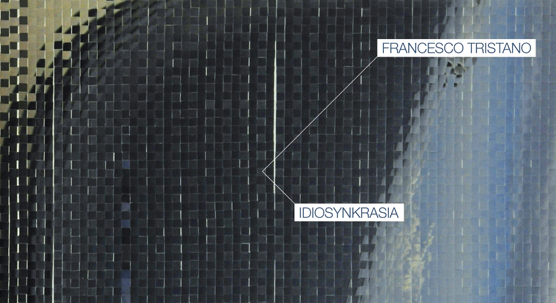
After ‘Not for piano’ and ‘Auricle Bio On’, Francesco Tristano presents his third LP for inFiné: Idiosynkrasia, which has been recorded in Carl Craig’s studios and will be released for Europe in November 2010.
If you had the fortune to witness Tristano’s last session, which took place July 18th at Space Ibiza, with a grand piano and Craig’s company controlling the Ableton Live with the help of an iPad, you will get an idea of where Idiosynkrasia goes.
Months ago in Detroit something similar happened: a grand piano and synthesizers took a unique place at Carl Craig’s Planet E studios. Francesco Tristano chose Detroit – The home of techno – specifically to record his third album, ‘Idiosynkrasia’.Some might be surprised by the juxtaposition of these two things, traditional and contemporary, classical and electronic. Yet, they are essentially links in a musical chain. After all, isn’t a grand piano the ancester of keyboards and the synthesizer – The sounds of which form the key element to all nightlife soundtracks? Either way, both instruments require a highly capable set of hands and Franceso Tristano’s are certainly that. Time after time, Francesco takes the piano, and with it, an entire audience, to wholly uncharted territories.
After a classical education – From music schools to philharmonic orchestras – Tristano’s career took a radical turn when he became a student at Juilliard School in New York. During that period, he discovered the clubbing scene, a whole new territory to explore for an artist who veers from conventional paths.
In Februrary 2005, at a performance at Bouffes du Nord, in Paris, Tristano brilliantly performed Derrick May’s ‘Strings of life’, a performance so powerful that it led directly onto the birth of inFiné, a label that has similarly taken a non-conventional path since its birth, in sync with Tristano.
Since then, two solo albums have been released already through the Agoria label: ‘Not for piano’ in 2007, which was produced by Murcof, and ‘Auricle bio on’ in 2008, that was masterized by Moritz Von Oswald (Basic Channel / Rythm & Sound). In 2009, Tristano followed this with his first release as Aufgang, a trio that also included Rami Khalifé and Aymeric Westrich, whom he met during his years in New York.
And now the tireless Francesco Tristano returns this fall with his new solo album entitled Idiosynkrasia. This release is the result of a quest for a language that is somewhere between the acoustic and the electronic.
‘My ambition is to give the piano a new identity, because it is often related to classical music, seen as an instrument of the past, whereas I see it as a tool of the future’, says Tristano.
Tristano collaborated with Carl Craig at his Planet E studio in Detroit and feels the city as well as Carl played a strong influence in the sound of the album,
‘Carl and Detroit have played a key role: a lot of the songs would not exist or maybe would sound completely different. The atmosphere of the city, the people with whom I’ve collaborated and the team at the studio have all been a great influence to me. The richness of the materials found in that place have given me a source of infinite ideas and sounds. To me, Planet E is the mecca of sound. Creating Idiosynkrasia, I’ve learnt a lot’.
Fundamentally polychromatic, this record presents itself as a new vision of music, that mixes space and time within one sound to create a new melodic vision.